

Discover the West Coast
A place to flourish.
The Plateau offers more than a place to build a home. It is an invitation to become part of one of New Zealand’s most distinctive regions, where the natural world shapes the rhythm
of everyday life.
Set between the Southern Alps and the Tasman Sea, Te Tai Poutini, the West Coast, offers an extraordinary sense of space while remaining connected to welcoming towns, creative communities and the practicalities of modern life.
Here, nature is not reserved for holidays. It is present in the view, the changing light and the places waiting just beyond your door.


Hokitika, close at hand.
Creative, welcoming and distinctly West Coast
At the heart of the region is Hokitika, a beachside town with a strong creative spirit and an enduring connection to pounamu.
Its galleries and studios reflect a rich tradition of craft, from pounamu carving to contemporary art and design. Cafés, hospitality and everyday services sit within a town shaped by its gold rush history, the dramatic coastline and the mountains visible beyond it.
Hokitika has the warmth and familiarity of a smaller community while remaining well connected. Here, creativity and daily life are closely tied to the surrounding landscape.

Landscape on a remarkable scale
Nature in every direction.
Stretching along the western edge of the South Island, the West Coast is shaped by native rainforest, glacial rivers, wetlands, coastline and the peaks of the Southern Alps. More than 80 per cent of the region is conservation land, protecting an extraordinary natural environment.
Rainfall is part of what keeps the landscape so green and abundant, but Hokitika receives far more sunshine than its reputation might suggest, with annual sunshine totals that can be comparable to Auckland.
For those drawn to a quieter and more grounded way of living, the region offers something increasingly rare: room to breathe and a close relationship with the natural world.
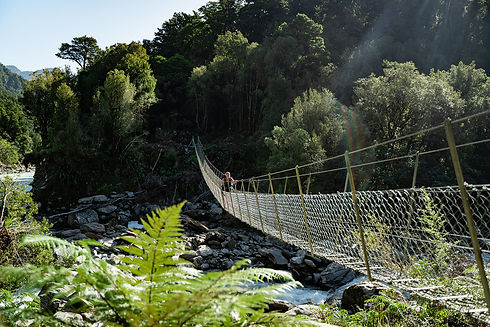
West Coast See & Do
Some of the West Coast’s most memorable places are within easy reach of Hokitika, making outdoor experiences part of everyday life rather than something saved for a special occasion.
Hokitika & Westland iSite
Located at 41 Weld Street, the official Hokitika isite Visitor Centre assists with local bookings, Department of Conservation hut passes, and travel. Visit their website for more information.
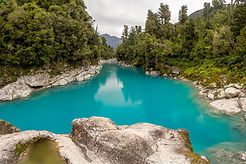
Hokitika Gorge
Discover the enchanting Hokitika Gorge Scenic Reserve, where an easy undulating walk takes you through a lush forest canopy of miro, rimu, and kamahi trees.
Cross the pedestrian suspension bridge and be captivated by breathtaking views of the vibrant blue waters, rocky gorge, and the majestic foothills of the Southern Alps. Along the well-formed 2.4 km trail, keep an eye out for the indiginous birdlife.
Just 33 km inland from Hokitika, this scenic reserve offers a perfect escape into nature, about an hour and a half to explore (not including photo stops).


LAKE KANIERE
Lake Kaniere is one of the most beautiful lakes in New Zealand and only a 25 minute drive from Hokitika.
The lake offers opportunity for a number of water sports such as water skiing and boating. There are also several picnic places, a camping area, and numerous short walks in area.
Be sure to visit nearby Dorothy Falls - a lovely spot for a refreshing dip.

Treetop Walkway
& Zipline
Experience the stunning West Coast like never before! Follow a journey that rises 20 metres above the forest floor. Ascend the 47-metre tower, and zipline through the forest for an unforgettable adventure.
Art & History
Explore local artisan studios specializing in pounamu jewellery, bone, glass, and pottery, alongside the town's gold-rush history.
The Wilderness
Trail
Now's the time to discover the last of the wild places with one of the country's smoothest and most accessible cycle trails.
Travelling through Hokitika, the West Coast Wilderness Trail passes through native forest and alongside glacial rivers, historic waterways and quiet lakes. Its gentle terrain allows riders to enjoy the full journey or shorter sections closer to home.

The wider
West Coast
Between Greymouth and Westport, the Great Coast Road winds between the Tasman Sea and rainforest-covered ranges.
Beyond Hokitika, the region continues north towards Punakaiki and south into Glacier Country and the wilderness of South Westland.
Recognised by Lonely Planet as one of the world’s top 10 coastal drives, it passes secluded beaches, small settlements and the Pancake Rocks at Punakaiki.

Connected, yet far from ordinary.
Hokitika’s sense of retreat is balanced by straightforward connections to Christchurch and the rest of New Zealand.
Daily flights connect Hokitika and Christchurch, while the TranzAlpine offers a memorable rail journey through the Southern Alps to Greymouth. Whether arriving by air, rail or road, the journey becomes part of the experience.
At The Plateau, the West Coast is more than a backdrop. It shapes the landscape, the architecture and the way life is imagined here.
This is a place to explore, a community to belong to and a landscape to call home.


ACKNOWLEDGEMENTS
The Plateau would like to extend our gratitude to the organizations linked in our See & Do section. We invite you to explore their websites through the provided links to learn more about their valuable contributions. Thank you for being a part of our journey!